
Journaling: writing to slow down, reflect and keep a trace
Journaling, or the art of keeping a journal, consists of writing regularly to set down your thoughts, note your daily life, organise your ideas or simply take a moment for yourself.
More than a writing habit, it's a way to create a personal space, away from the fast pace of screens and constant demands.
We write sometimes to understand what we feel, sometimes to remember, sometimes to plan, imagine or observe more carefully what surrounds us. Journaling can be intimate, creative, structured or very free. It can take many forms — and that is precisely what makes it such a rich practice.
An ancient practice, still relevant today
Writing to keep a trace of one's life, thoughts or observations is an ancient practice. For a long time, personal journals, travel notebooks, note pads or observation books have accompanied the gestures of daily life.
People wrote to remember, to reflect, to tell stories or simply to note what deserves to remain.
Today, this practice continues to exist in many varied forms. What we call journaling is no longer limited to the personal diary in the traditional sense. It can also become a tool for organisation, a space for reflection, a creative support or a moment of pause.
The page then becomes a simple place where thoughts can settle.
What is journaling?
Journaling consists of writing in a regular or spontaneous way in a notebook. The goal is not to write perfectly, but to write sincerely.
Some people take a few minutes in the morning to begin the day with more clarity. Others write in the evening to take stock of what they've experienced. Still others open their notebook throughout the day, whenever the need arises.
You can note an idea, an emotion, a memory, a list, an intention or simply a few lines about your day.
Over time, the notebook becomes a personal space: a place to reflect, organise, observe or keep a trace.
The main forms of journaling
There are many ways to practice journaling. Some are very free, others more structured, more creative or more introspective.
The personal journal
The personal journal is the freest and most intimate form. It allows you to write about your daily life, your thoughts, your emotions or the moments that mark a period of life. It follows no particular structure. You can write a full page, a few dated lines or simply note what you feel in the moment.
Gratitude journaling
Gratitude journaling consists of paying attention to what feels good in daily life. It invites you to note what you feel grateful for: a calm moment, a meeting, a word, a detail of the day. This practice helps to look more attentively at the positive moments of daily life.
Reflective journaling
Reflective journaling helps to clarify your thoughts and gain perspective on certain situations. You can explore an emotion, reflect on a decision or simply put order into what seems confused. Writing then becomes a tool for thinking more serenely.
Free writing
Free writing consists of writing without any particular structure, letting thoughts come as they appear. It seeks neither order nor perfection. The idea is simply to put words on the page, without filter. This practice is often used to clear the mind and find clarity.
Bullet journal
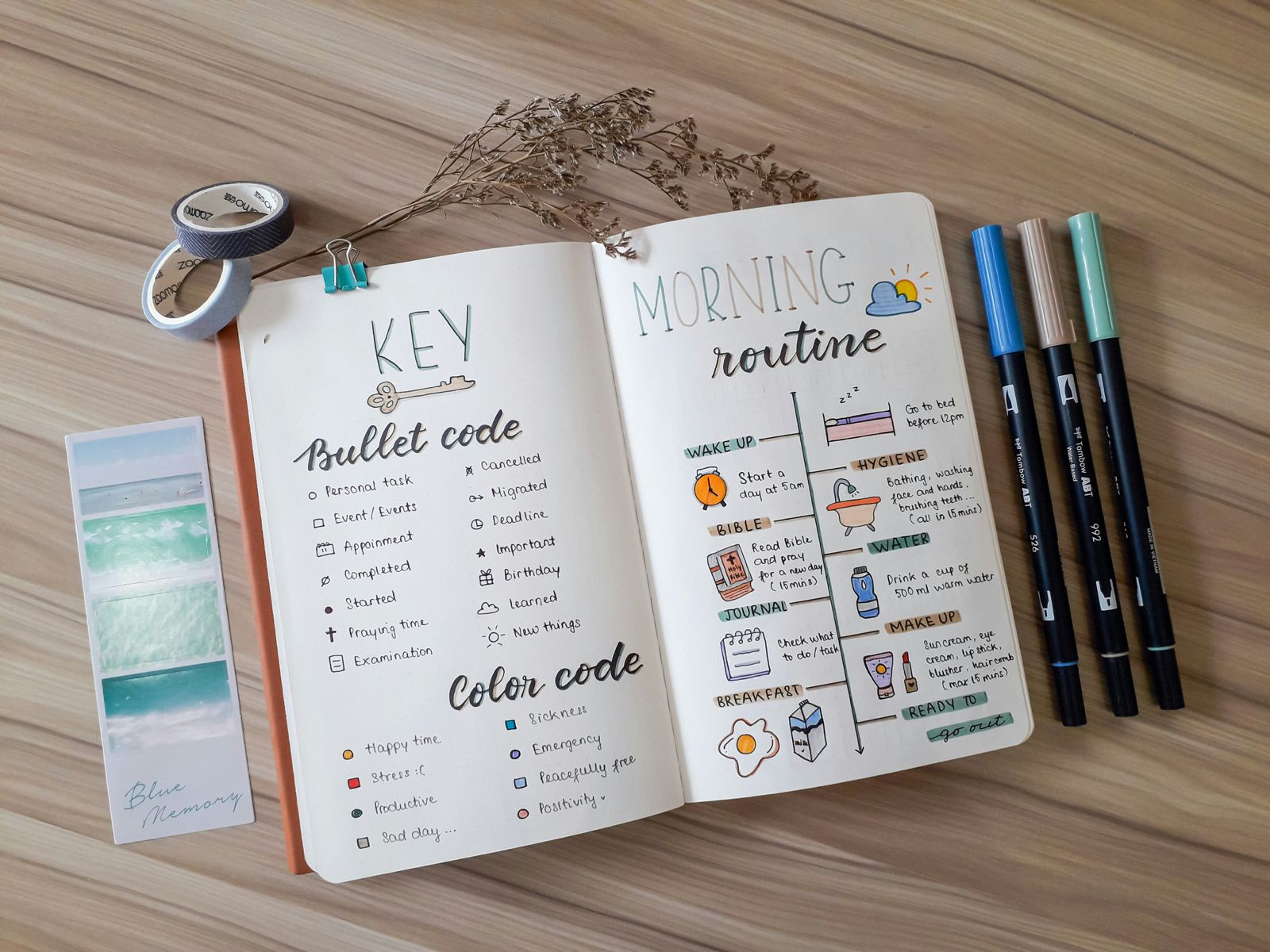
The bullet journal is a paper organisation method that is both structured and very flexible. It allows you to track daily life, tasks, projects and habits in a single notebook. You'll find trackers that allow you to visually track certain habits: habit tracker, mood tracker, sleep tracker, water tracker, reading tracker, spending tracker.
Goals journal
The goals journal gives a concrete place to your projects and intentions. You note what you want to accomplish, the steps to get there and the progress made. You'll often find short or long-term goals, reviews, priorities or reflections on the journey so far.
Creative journaling
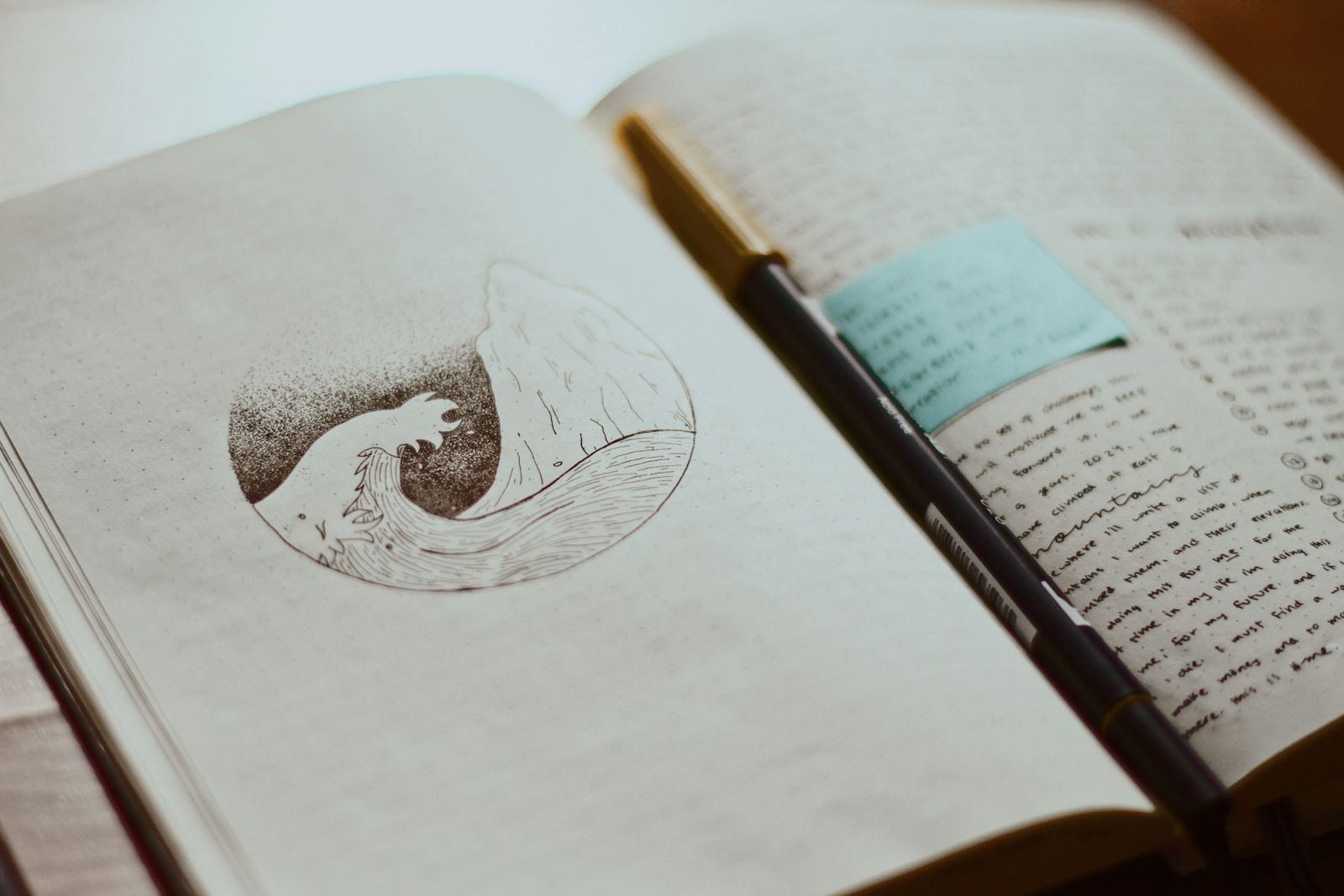
Creative journaling blends writing with visual elements. The notebook can welcome drawings, collages, photos, colours, stamps or washi tape. The pages become freer and more expressive. The notebook transforms into a space for creative exploration.
Travel journal
The travel journal allows you to keep a sensitive trace of a place, a meeting or an itinerary. You note your impressions, discoveries, anecdotes or addresses. You can also slip in tickets, maps or small souvenirs collected during the trip.
Reading journal
The reading journal accompanies the books you read. You note your impressions, memorable quotes, ideas to remember or books you'd like to discover. It's a way to extend the reading experience and keep a more personal trace.
Dream journal
The dream journal consists of noting your dreams upon waking, before they fade. You write down the images, sensations or fragments you still remember. These pages are often spontaneous and raw, to preserve what remains of the dream.
This diversity shows that there is no single right way to journal, but multiple practices, to adapt according to your desires, needs and moments in life.
Good journaling is above all what resembles you
There is no single right way to journal. You can write in the morning, in the evening or at different times of the day.
Some people prefer a single notebook that gathers everything. Others choose to use several depending on their wishes: to organise their days, reflect, create or keep a trace of their memories.
Good journaling is above all what resembles you.
It is not always limited to a single form: the same notebook can welcome reflections, lists, trackers, gratitude pages or memories.
More than a fixed method, journaling is a personal, free and evolving practice, which adapts to desires, needs and moments in life.
The benefits of journaling
If journaling attracts so many people today, it may be because it responds to a simple need: to slow down.
Writing by hand changes the rhythm. Thoughts settle differently, more slowly.
Journaling can help to clarify what seems confused, to gain perspective on your emotions or to lighten the mental load.
It can also nourish creativity, support the organisation of daily life and allow you to keep a trace of moments you would otherwise have forgotten.
Rereading a notebook a few months or years later can be a precious experience: you find fragments of life, past reflections, and sometimes the journey travelled.
How to start?
Starting journaling is often simpler than you might imagine.
All you need is a notebook you want to open, a pleasant pen and a few quiet minutes.
You can write what you feel today, note an idea, a question, an intention or simply tell a moment of the day.
It's not necessary to have a perfect method. Journaling often takes shape over time, as the notebook becomes more personal.
A simple, personal and living practice
Journaling is not reserved for a few creative or very organised profiles. It is accessible to everyone, as long as you accept writing without pressure.
Structured or spontaneous, minimal or visual, intimate or practical, it can take the form that suits each person best.
At heart, keeping a journal is perhaps simply this: creating a space for yourself to write, observe, preserve or dream.
Page by page, the notebook becomes a daily companion.
A notebook, a pen, a few minutes: sometimes that's enough to come back to what matters.
Discover our notebooks and accessories
Explore our collection of journals, notebooks and accessories designed to accompany your journaling practice.